
Dental Crowns & Bridges in Pune
Dental Crowns & Bridges in Pune for Damaged and Missing Teeth
A damaged, weakened, or missing tooth can affect more than your smile. It may make chewing difficult, alter your bite, affect speech, and allow neighbouring teeth to shift over time. Dental crowns and bridges are restorative treatments designed to restore the structure, function, and appearance of teeth when fillings or other conservative treatments may not be sufficient.
At Regal Dental Kare, we provide personalised Crowns and Bridges in Pune based on the condition of your teeth, gums, bite, and overall oral health. Our treatment planning is led by Dr. Dannish Virrani, Prosthodontist & Implantologist, with a focus on functional, durable, and natural-looking dental restorations.
Whether you need a crown after root canal treatment, a restoration for a fractured tooth, or a fixed bridge to replace a missing tooth, the treatment is planned according to your individual dental requirements.
Our Crowns & Bridges Treatment Process
Dental Examination
Our dentist examines your teeth, gums, bite, and overall oral health to understand the condition of the tooth or teeth requiring restoration.
Digital Dental Imaging
Dental X-rays or other imaging may be recommended to evaluate the tooth structure, roots, surrounding bone, and supporting teeth before treatment.
Treatment Planning
Based on your dental condition, our team recommends the most suitable restoration, such as a dental crown or dental bridge, and explains the available options.
Tooth Preparation
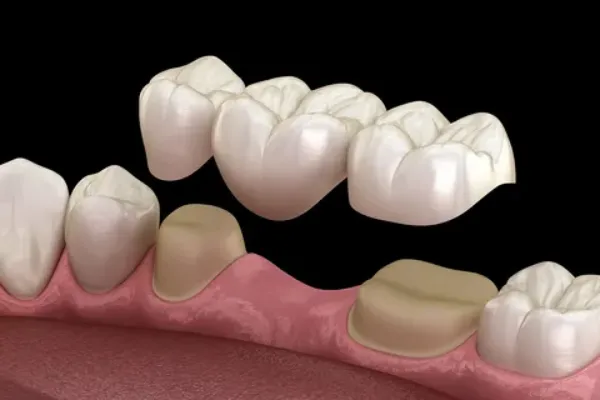
For a crown, the affected tooth is carefully prepared to create sufficient space for the restoration. For a bridge, the supporting teeth are prepared when required.
Customised Crown or Bridge
The restoration is designed to match your natural teeth in shape, size, and appearance. Your dentist ensures that the restoration fits properly with your bite.
What Are Dental Crowns?
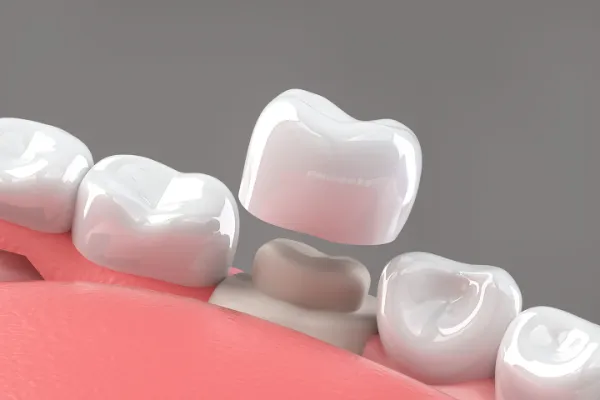
When Is a Dental Crown Recommended?
A dental crown may be considered for:
- Teeth with extensive decay
- Cracked or fractured teeth
- Teeth weakened by large fillings
- Teeth that have undergone root canal treatment
- Severely worn teeth
- Structurally compromised teeth
- Replacement of certain existing crowns
- Selected cosmetic and restorative cases
The decision to place a crown depends on the amount of healthy tooth structure remaining, periodontal health, bite forces, and the long-term prognosis of the tooth.
What Are Dental Bridges?
A dental bridge is a fixed prosthetic restoration used to replace one or more missing teeth. A replacement tooth, known as a pontic, is supported by adjacent teeth or other appropriate structures.
Unlike a removable denture, a conventional dental bridge is fixed in position and is designed to restore chewing function and the appearance of the missing-tooth area.
A bridge may also help maintain the space created by a missing tooth and reduce unwanted movement of neighbouring teeth.
Benefits of Crowns and Bridges
When appropriately planned and maintained, crowns and bridges can help:
- Restore damaged tooth structure
- Replace missing teeth
- Improve chewing efficiency
- Restore tooth shape and appearance
- Protect weakened teeth
- Restore teeth after root canal treatment
- Maintain the space created by missing teeth
- Improve smile aesthetics
- Support functional rehabilitation
- Improve overall dental function
Types of Dental Crowns
The most appropriate crown material depends on the location of the tooth, aesthetic requirements, functional demands, available tooth structure, bite, and other clinical factors.
Zirconia Crowns
Zirconia crowns are known for their strength, durability, and tooth-coloured appearance. They may be considered for both anterior and posterior teeth depending on the clinical situation.
Ceramic or All-Ceramic Crowns
All-ceramic restorations can provide highly aesthetic results because of their natural translucency and tooth-like appearance. They may be particularly suitable for selected visible teeth where aesthetics are a major consideration.
Porcelain-Fused-to-Metal Crowns
Porcelain-fused-to-metal crowns combine a metal substructure with a tooth-coloured ceramic outer layer. They have been used extensively for restoring teeth and may be considered in selected clinical situations.
Metal Crowns
Metal restorations can offer excellent strength and wear resistance. However, because of their appearance, they are generally more suitable for selected posterior applications where aesthetics are less important.
Your dentist will recommend the appropriate material after evaluating your tooth and discussing your functional and aesthetic requirements.
Types of Dental Bridges
Different bridge designs may be used depending on the location of the missing tooth and the condition of the supporting structures.
Traditional Dental Bridge
A traditional bridge uses crowns placed on supporting teeth on either side of the missing tooth or space.
Cantilever Bridge
A cantilever bridge is supported from one side. It is suitable only for selected situations where the supporting tooth and location of the missing tooth allow for this design.
Maryland Bridge
A Maryland bridge uses a framework or wings bonded to supporting teeth. It may be considered in selected cases, particularly for certain anterior tooth replacements.
Implant-Supported Bridge
An implant-supported bridge is supported by dental implants rather than relying entirely on natural neighbouring teeth. This may be considered when multiple adjacent teeth are missing and the patient has suitable bone and oral health.
The most suitable design depends on the number and position of missing teeth, bone and gum condition, supporting teeth, bite, and overall treatment plan.
Book Crowns & Bridges Treatment in Pune
Looking for Crowns and Bridges in Pune, Dental Crowns in Pune, or Dental Bridges in Pune?
At Regal Dental Kare, restorative and prosthodontic treatment is planned around the individual patient’s dental condition, functional requirements, aesthetic goals, and long-term oral health.
Led by Dr. Dannish Virrani, Prosthodontist & Implantologist, our team provides comprehensive treatment planning for damaged and missing teeth using modern restorative and prosthodontic techniques.
If you are looking for a Dental Clinic in Pune for crowns, bridges, or other restorative dental treatments, book a consultation for a detailed evaluation.
Crowns and Bridges Cost in Pune
The Crowns and Bridges Cost in Pune varies from patient to patient because the treatment depends on the clinical condition and type of restoration required.
Factors that can influence the cost include:
- Type of crown or bridge
- Material selected
- Number of teeth involved
- Condition of the supporting teeth
- Need for root canal treatment
- Existing restoration removal
- Complexity of tooth preparation
- Laboratory and digital fabrication requirements
- Temporary restorations
- Additional periodontal or restorative treatment
An accurate treatment estimate can be provided after a dental examination and treatment planning.
Frequently Asked Questions
What is the difference between a crown and a bridge?
A crown is generally used to restore and cover an existing damaged tooth, while a bridge is designed to replace one or more missing teeth using appropriate supporting structures.
Is a dental crown better than a filling?
A crown and a filling serve different purposes. A filling may be appropriate when sufficient healthy tooth structure remains, while a crown may be recommended when a tooth requires greater structural protection.
Can I get a crown after a root canal?
Yes. Depending on the tooth and the amount of remaining structure, a crown may be recommended after root canal treatment to provide additional protection and restore function.
Are dental bridges removable?
Conventional dental bridges are fixed restorations and are not designed to be removed by the patient. Other tooth replacement options, such as removable partial dentures, work differently.
Which crown material is best?
There is no single crown material that is best for every patient. The appropriate material depends on tooth location, functional forces, aesthetics, remaining tooth structure, bite, and individual treatment requirements.